Loading...
Uneven floors crack tile, buckle hardwood, and make every room feel off. We fix concrete floors in Lodi, CA with self-leveling overlays that create a flat, stable surface without tearing out what you have.
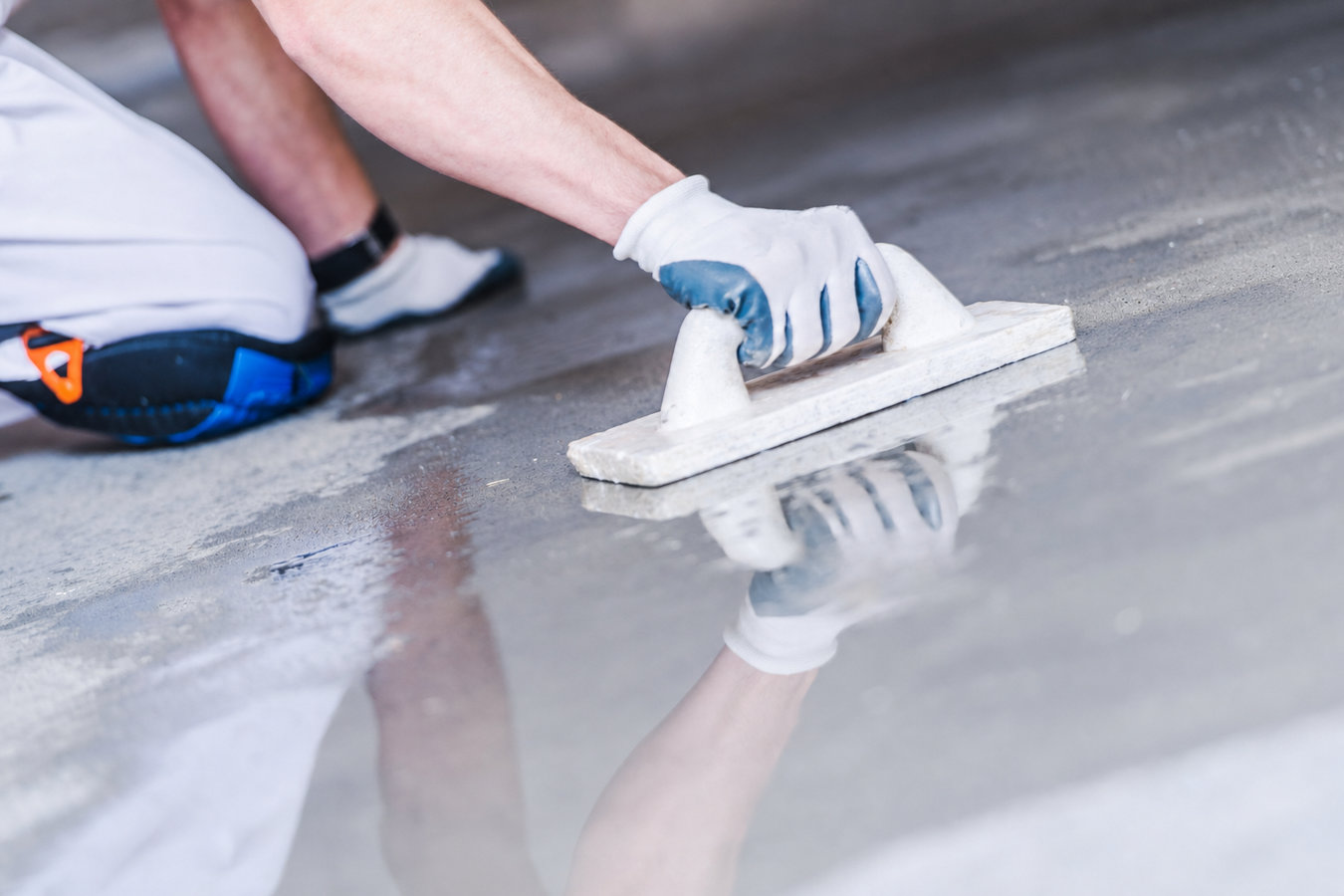
Self-leveling concrete in Lodi, CA is a specially mixed material that flows across an uneven floor and settles into a smooth, flat surface on its own - no troweling required. It is poured over your existing concrete slab, fills in low spots, and creates a flat base, most residential jobs take one to two days and foot traffic is safe within 24 hours.
This service makes the most sense when your floor is uneven and either new flooring needs a flat base to go over, or the slab itself is worn and you want a clean finished surface without the cost of a full replacement. For Lodi homeowners dealing with floors that have developed low spots from decades of clay soil movement, this is a significantly less disruptive fix than jackhammering out the slab and pouring new concrete. If the surface also needs decorative treatment after leveling, we can apply a concrete resurfacing overlay on top once the base has cured.
For outdoor areas like patios and pool decks that are also uneven, our pool deck coatings and resurfacing service addresses the specific demands of exterior wet surfaces, including slip resistance and UV stability.
If water pools in one corner of your garage or laundry room after mopping, or furniture rocks on what should be a flat surface, your slab has likely settled unevenly. This is one of the most common reasons Lodi homeowners call a concrete flooring contractor, and it is exactly the problem self-leveling concrete is designed to fix.
If you have replaced tile or vinyl flooring more than once and it keeps cracking or lifting in the same area, the problem is not the flooring - it is the uneven base underneath. Laying new flooring over a wavy slab just transfers the problem upward. A self-leveling overlay creates the flat, stable base that new flooring needs to last.
Lodi's climate swings between dry, hot summers and wet winters. That cycle causes clay-heavy soil under many local slabs to expand and contract, pushing sections up or letting them sink. If your floor feels noticeably different than it did five or ten years ago, soil movement is a likely cause.
Most flooring products - hardwood, luxury vinyl, tile - require a surface that is flat within a small tolerance. If a flooring installer has told you the slab needs to be leveled before they can proceed, that is a direct referral for this service. Skipping this step and laying flooring over an uneven base almost always leads to premature failure.
Self-leveling concrete is not one product applied the same way to every floor - the approach varies based on how much the floor is out of level, what is on it now, and what needs to go on top afterward. A floor receiving tile or hardwood needs a flat, neutral-gray surface with tight tolerances. A garage floor being converted to a finished space may need leveling followed by a stain or epoxy coating on top. A basement with uneven sections may need targeted patching in some areas and a full pour in others. We assess each floor individually before recommending a specific approach.
Moisture testing is a required step on every job we do in Lodi - not an optional upgrade. Older homes here commonly have slabs sitting directly on soil, and moisture vapor from below is the most common cause of overlay failure. If we find moisture, we address it with a vapor barrier or blocking primer before the pour. After the self-leveling base cures, a decorative overlay can be applied for a finished appearance. For outdoor surfaces, our pool deck coatings and resurfacing handles uneven exterior slabs with finishes built for sun and water exposure.
Suits homeowners whose flooring installer has flagged the slab as too uneven - creates the flat, stable base hardwood, tile, and vinyl need to last.
Suits garages, basements, and laundry rooms where the entire slab has settled unevenly over years of seasonal soil movement.
Suits homeowners who want a finished look on a worn or uneven slab - leveling followed by a stained, colored, or polished surface.
Suits older Lodi homes where moisture testing reveals vapor coming up through the slab - a barrier goes down before the self-leveling material.
Lodi's housing stock and soil conditions create ideal conditions for floor unevenness. A large portion of homes in and around Lodi were built in the 1950s through 1970s, and those original slabs have been through four or five decades of the San Joaquin Valley's seasonal wet-dry cycle. Expansive clay soils swell every wet winter and shrink every dry summer, and that consistent movement pushes slab sections up or lets them sink in ways that are gradual at first and obvious by the time someone tries to install flooring. Homeowners in Stockton face the same conditions across the same soil type, and we bring that awareness to every job we book in the region.
Lodi's summer heat also shapes how this work gets done. Self-leveling concrete poured during peak afternoon heat in July sets too fast - the material does not have time to flow and level properly, and the result is a floor with ridges and weak spots. Experienced local crews schedule pours for early morning during warm months, and the San Joaquin Valley Air Pollution Control District also sets requirements for how surface prep is handled in terms of dust containment - standards that responsible local contractors follow as a matter of course. For customers in Manteca and throughout San Joaquin County, the same climate and soil considerations guide every project. The Portland Cement Association provides technical guidance on cementitious underlayment installation at cement.org.
We respond within 1 business day. We will ask for the square footage, what the floor is currently made of, and what you are hoping to achieve - flat base for new flooring or a finished decorative surface - before scheduling a free on-site estimate.
We inspect the existing floor for cracks, soft spots, how far out of level it actually is, and whether moisture is pushing up through the slab. If moisture is detected, we explain your options before any work begins.
The crew grinds or cleans the existing surface to remove loose material, old adhesive, and contamination. In Lodi and across San Joaquin Valley, we use vacuum-equipped grinders to follow local air quality rules. A bonding primer goes down before the pour.
The self-leveling material is poured and flows across the surface on its own. If a decorative finish is part of the plan, that follows the next day after the base cures. We walk the finished floor with you before leaving and cover care instructions for the curing period.
Free estimate, no pressure. We check moisture, assess the slab, and give you a written quote before any work begins.
(209) 904-9638We hold an active CSLB C-8 Concrete license, verifiable at cslb.ca.gov. Every project includes a written scope of work and is backed by liability insurance - so you have something to stand on if anything goes wrong.
Concrete grinding generates fine silica-containing dust. The San Joaquin Valley Air Pollution Control District sets strict requirements for dust control in this region. We use vacuum-equipped grinders on every prep job - protecting your household and following local rules. See district guidance at{' '}valleyair.org.
Self-leveling concrete poured during a Lodi afternoon in July can set before the crew finishes spreading it - leading to ridges, weak spots, and surface failures. We schedule pours for early morning during warm months and use materials formulated for the Central Valley climate.
Lodi's older homes commonly have slabs that sit directly on soil, and moisture pushing up from below is the leading cause of overlay failure. We test before we pour - not after. If moisture is found, we address it with a barrier or blocking primer, not a workaround.
Self-leveling concrete is only as good as the preparation that precedes it and the conditions it cures in. We account for both - because a floor that looks right on day one but fails in year two is not a job we want our name on.
Restore and protect outdoor pool deck surfaces with coatings built for wet conditions, UV exposure, and slip resistance.
Learn MoreApply a bonded decorative or protective layer over an existing slab to restore appearance and extend its life without full replacement.
Learn MoreSpring and fall booking slots fill quickly - reach out now and lock in your estimate before the schedule fills up.